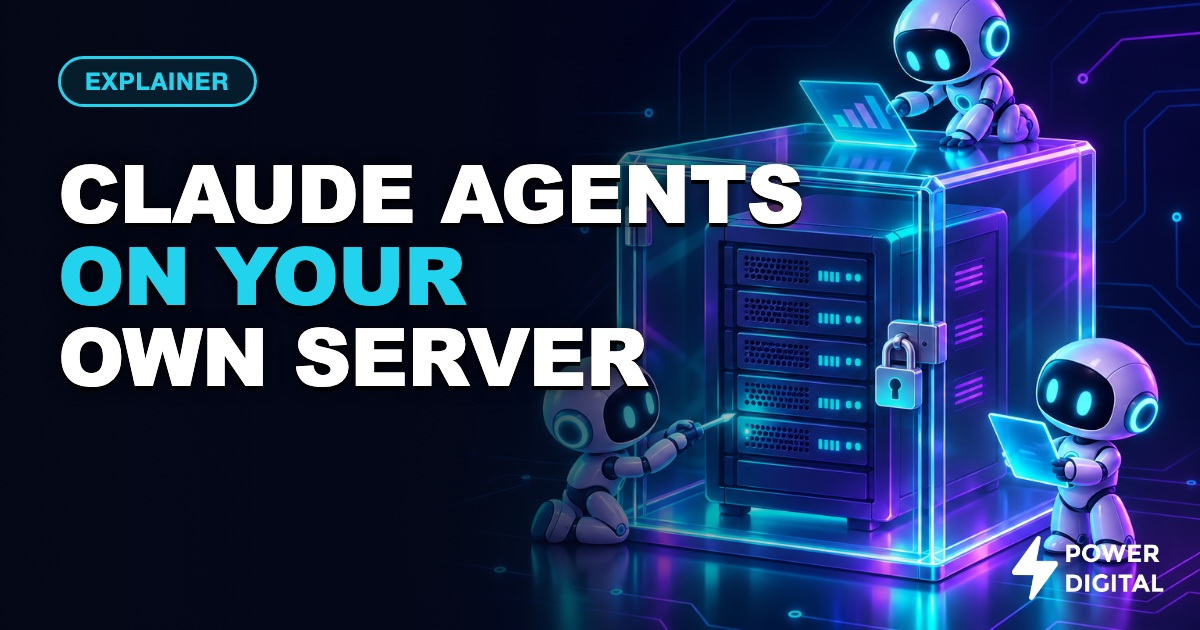
In short: On 12 November 2026 Anthropic said the whole Claude Managed Agents service can now run on your own servers, not only the code-running sandboxes. It is available by request through your Anthropic account team, and pricing has not been published.
What happened
Anthropic's platform release notes list "Self-hosted Claude Managed Agents" under 12 November 2026. Managed Agents is Anthropic's ready-made agent harness. Your code creates an agent, opens a session, then sends and receives events while the agent runs. Until now Anthropic ran the service. With this launch you can run it yourself, in a cloud account or an on-premise data centre.
The release notes say you store agents, sessions and session history on your own infrastructure. Model requests go from the server to whichever provider you pick, with Anthropic as the fallback default. Access is by request, so you contact your Anthropic account team.
If you are new to the term, our guide to what an AI agent is covers the basics, and our AI agent development service is where we build them for clients.
Key details
Three ways to host, per Anthropic's docs
You can host two separate pieces. One is the sandboxes, meaning the containers or VMs in which the agent runs commands and handles files. The other is the service itself, which covers the API, the loop that drives the agent and the storage of agents, sessions and their history. Anthropic's self-hosted overview sets out the options:
| Option | Sandboxes | Service | Model |
|---|---|---|---|
| Cloud sandboxes (default) | Anthropic | Anthropic | Anthropic |
| Self-hosted sandboxes | You | Anthropic | Anthropic |
| Self-hosted Managed Agents | You | You | Anthropic, or a provider you choose |
What you would run
- A server called
cma-server, which serves the API, runs the agent loop and stores history. It never runs the agent's shell or file tools. - A PostgreSQL 16 or later database. Without one, the server keeps data in memory and a restart erases it.
- Workers, which take work from the server and run the agent's shell and file tools in your sandboxes.
- An optional console on your server, with sign-in through your own identity provider.
The docs state that the agent's bash tool is a real shell and the worker does not isolate it, so isolation depends on what the worker runs in. Securing the server, hosting memory stores and spotting unusual usage become your job.
Where data goes
Each model call carries the conversation so far, including tool inputs and results, to your inference provider. The docs name Amazon Bedrock, Claude Models on Google Cloud (Google managed), Microsoft Foundry or your own model gateway as options. When the provider is the Claude API, calls also carry three ID headers (session, agent, environment) and the server checks its credential every 60 seconds by default. Anthropic says it has no remote access to the server or its log.
One notable change: Anthropic's pages say Managed Agents is normally not eligible for zero data retention (ZDR) because Anthropic stores session transcripts, with self-hosted Managed Agents as the exception, because you store them. The same pages say the service is not eligible for HIPAA coverage.
What you lose compared with the hosted service
The differences page says nothing is copied across from the hosted service, session history included. Webhooks, scheduled deployments, dreams, cloud environments and the Messages API are not available, nor are file session resources, mcp_oauth credentials and the prebuilt docx, pdf, pptx and xlsx skills. MCP servers, Git hosts and web search and fetch each need an entry in the server's settings before they work. Multiagent orchestration is limited to a coordinator with a listed set of subagents. You also install each release yourself.
Price
Anthropic's pricing page says pricing for self-hosted Managed Agents is available by contacting your account team. The hosted service is billed on tokens plus session runtime. Rates below are in USD, converted at 1 USD = 1.2896 SGD, the European Central Bank reference rate for 18 November 2026 as published by Frankfurter. SGD figures are rounded.
| Item (hosted service) | USD | SGD |
|---|---|---|
| Session runtime, per session-hour (only while status is running) | $0.08 | S$0.10 |
| Claude Sonnet 5.5, input / output per million tokens | $2 / $10 | S$2.58 / S$12.90 |
| Claude Opus 5.5, input / output per million tokens | $4 / $20 | S$5.16 / S$25.79 |
| Claude Haiku 5.5 (prompts up to 100,000 tokens), input / output per million | $0.10 / $0.50 | S$0.13 / S$0.64 |
Anthropic has not said whether the same token rates apply when a self-hosted server calls the Claude API.
How it compares
Self-hosted sandboxes keep the agent's files and processes on your machines, but conversation history and tool results still reach Anthropic's service. Self-hosted Managed Agents goes further and keeps the history on your side. At the other end, the Messages API is for teams that want to write their own agent loop with fine-grained control, according to the Managed Agents overview. For model choice inside any of these, see our guide to choosing between Opus, Sonnet and Haiku 5.5.
What it means for businesses
Decision table: hosted, self-hosted or your own loop
This table is Power Digital's view, based on the documentation above.
| Situation | Hosted cloud sandboxes | Self-hosted sandboxes | Self-hosted Managed Agents | Your own loop (Messages API) |
|---|---|---|---|---|
| Small team, no one to run servers | Best fit. Nothing to operate. | Only if tools must touch your network. | Poor fit. You run a server, a database and each upgrade. | Needs engineering time to build and maintain. |
| Medium team with some DevOps | Good default for most work. | Good when files or internal systems must stay local. | Consider only if a rule or client forces it. | Worth it if you need control the harness does not give. |
| Large team or platform group | Fine for non-sensitive agents. | Common middle path. | Reasonable: single sign-on, secret manager and your own database are supported. | Reasonable if agent behaviour is a core product. |
| Low data sensitivity (public or marketing content) | Best fit. | Unnecessary. | Unnecessary. | Unnecessary. |
| High sensitivity (customer records, finance, health) | Transcripts stored by Anthropic, not ZDR eligible. | Files stay local, history still goes to Anthropic. | History stays with you. Model calls still leave unless your provider is in your control. | You decide what is stored, and you carry all the build work. |
| Cost shape | $0.08 per running session-hour plus tokens. | Billing has not been published. Assumed to match hosted, plus your worker hosts. | Not published. Plus your servers, database and staff time. | Tokens only, plus your own build and hosting. |
What the runtime fee means in practice
The runtime fee is small next to tokens. The table uses the $0.08 rate and counts running time only, not tokens.
| Running session-hours per month | Runtime cost USD | Runtime cost SGD |
|---|---|---|
| 100 | $8 | S$10 |
| 500 | $40 | S$52 |
| 2,000 | $160 | S$206 |
So the hosted fee is rarely the reason to self-host. The real cost of self-hosting is staff time: keeping a server patched, a database backed up, workers isolated and releases installed.
A checklist before you ask for access
- Write down which data the agent will touch and who in your business owns it.
- Ask whether the actual requirement is where transcripts are stored, where tools run, or where the model runs. The three options solve different ones.
- If you handle personal data of people in Singapore, ask your legal adviser what the PDPA requires when that data is sent to a model provider overseas.
- Decide who will run the server and the database, and who is on call when a session stops at a tool call because no worker is polling.
- List the hosted features you depend on (webhooks, scheduled runs, file uploads) and confirm a workaround exists.
- Ask your account team for the licence price, the support terms and the release process in writing.
- Plan least-privilege access: Anthropic's docs recommend one deployment per tenant or trust level.
For agent security more broadly, see our explainer on prompt injection for business owners, and the IMDA agentic AI framework checklist for SMEs.
Our take
This is Power Digital's view. For most Singapore small and medium businesses, the hosted service remains the sensible start: nothing to run, and the runtime fee is cents per hour. Self-hosting the full service is for organisations where a client contract, a regulator or an internal policy says session history must sit on infrastructure you control. It trades convenience for responsibility, and the list of missing hosted features is long enough that you should test your own workflow against it first. We would also read the licence terms before committing. If you are weighing these options for a real project, talk to us about agent development, and if the agent sits behind a customer-facing site, our web application development team can build that part.
Sources
- https://platform.claude.com/docs/en/release-notes/overview: 12 November 2026 announcement, availability by request
- https://platform.claude.com/docs/en/managed-agents/self-hosted: architecture, options table, components, security responsibilities
- https://platform.claude.com/docs/en/managed-agents/self-hosted/differences: missing and changed features, settings needed
- https://platform.claude.com/docs/en/managed-agents/self-hosted-data-and-access: what leaves the network, data retention, multitenancy
- https://platform.claude.com/docs/en/managed-agents/self-hosted-sandboxes: self-hosted sandboxes, beta status
- https://platform.claude.com/docs/en/managed-agents/choosing-an-environment: when to choose each environment
- https://platform.claude.com/docs/en/managed-agents/overview: what Managed Agents is, ZDR and HIPAA status
- https://platform.claude.com/docs/en/about-claude/pricing: token rates, session runtime fee, self-hosted pricing by request
- https://api.frankfurter.dev/v1/latest?base=USD&symbols=SGD: USD to SGD rate of 1.2896 dated 18 November 2026