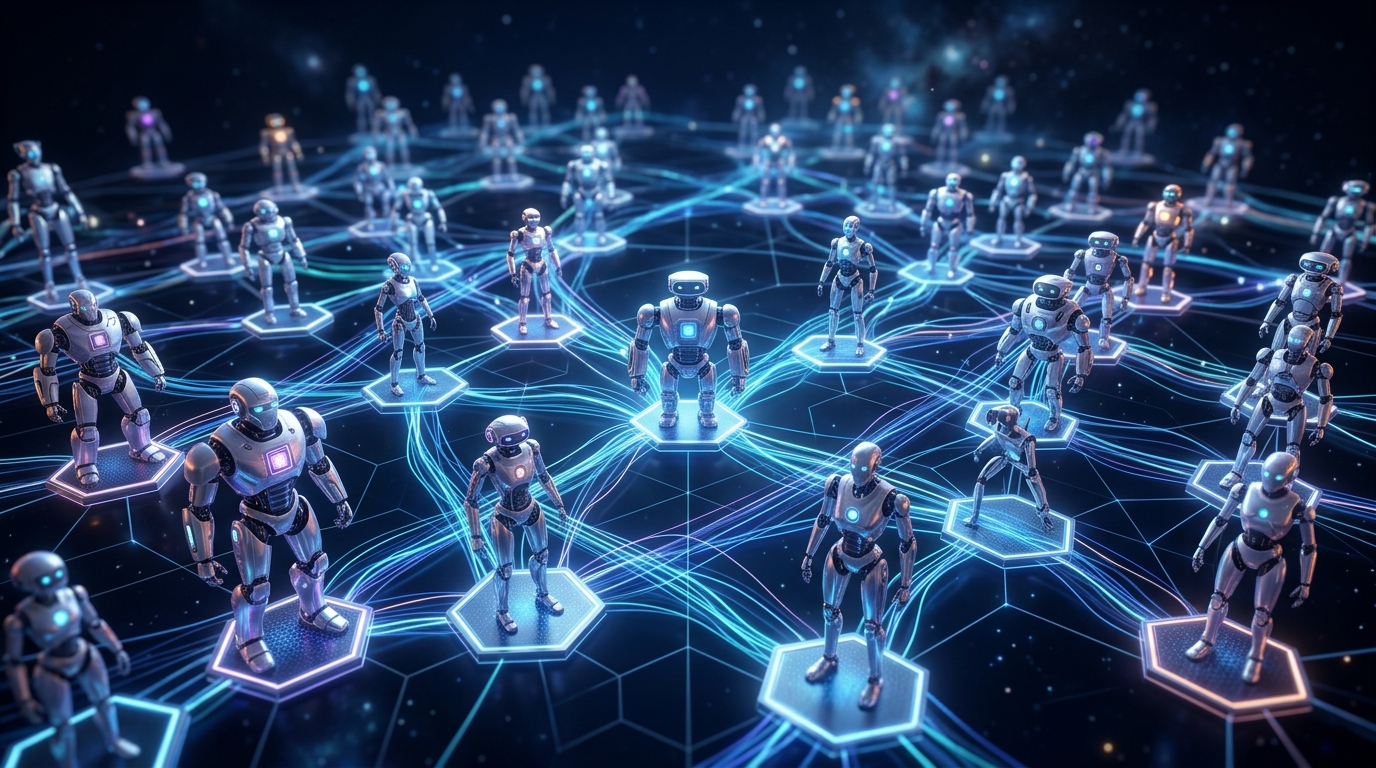
A single AI agent can handle a lot. But some tasks are too complex, too long, or too multi-disciplinary for one agent to do well. Multi-agent systems solve this by splitting the work across specialised agents that collaborate.
What Is a Multi-Agent System?
A multi-agent system (MAS) is a setup where multiple AI agents work together on a shared goal. Each agent has a specific role. A coordinator agent breaks the goal into sub-tasks, worker agents execute them, and a reviewer agent checks output before it's accepted.
Why Use Multiple Agents?
Context window limits: A complex task with many sources and steps may exceed what one agent can hold in context. Splitting across agents solves this.
Specialisation: A coding agent, a research agent, and a writing agent will each outperform a single generalist agent asked to do all three.
Parallelism: Independent sub-tasks can run simultaneously, dramatically reducing total time.
Error isolation: When one agent fails, it does not corrupt the entire task — the coordinator can retry just that sub-task.
Common Architectures
Supervisor pattern: One coordinator delegates to workers and assembles the final output. Simple and predictable. Good starting point.
Pipeline pattern: Agents form a sequential chain. Output of agent A becomes input to agent B. Good for content workflows: research feeds writer feeds editor.
Peer-to-peer pattern: Agents communicate directly without a central coordinator. More flexible but harder to debug.
Supervisor Example with LangGraph
from langgraph.graph import StateGraph, END

def supervisor(state):
    if not state.get("research_done"):
        return "researcher"
    if not state.get("draft_done"):
        return "writer"
    return END

def researcher(state):
    results = search_web(state["task"])
    return {"research": results, "research_done": True}

def writer(state):
    draft = write_from_research(state["research"])
    return {"draft": draft, "draft_done": True}

builder = StateGraph(dict)
builder.add_node("supervisor", supervisor)
builder.add_node("researcher", researcher)
builder.add_node("writer", writer)
builder.set_entry_point("supervisor")
builder.add_conditional_edges("supervisor", supervisor,
    {"researcher":"researcher","writer":"writer", END:END})
builder.add_edge("researcher", "supervisor")
builder.add_edge("writer", "supervisor")
graph = builder.compile()
When NOT to Use Multi-Agent
Multi-agent systems are more complex, more expensive (every agent call costs tokens), and harder to debug. Do not use them because they sound impressive. Start with one agent. Add agents only when you hit a real ceiling.
Building a multi-agent pipeline? Power Digital designs and builds production AI agent systems for Singapore companies.