
How We Built an AI Puzzle Platform Targeting 162K Monthly Searches
When the team at PowerDigital decided to build a puzzle game platform, the brief was simple: combine the viral mechanics of daily word games with AI-powered personalisation, then target markets where the puzzle game trend was still early. What emerged was SGPuzzleDaily.com — 18 games, three markets, and a content strategy targeting over 162,000 monthly searches.
This is how we built it, what we learned, and what the data looks like six months in.
The Opportunity We Spotted
In 2022, Wordle exploded. By 2023, every major publisher had a daily puzzle section. By 2024, the initial novelty had worn off for Western markets — but search volume in Southeast Asia was still growing. A quick DataForSEO pull confirmed it: terms like "wordle today", "word puzzle online", and "crossword singapore" were pulling solid monthly volumes with surprisingly low keyword difficulty in SG, MY, and ID.
The bigger opportunity wasn't the generic puzzle terms. It was the brand-specific queries — "wordle hints today", "connections nyt", "mini crossword" — searches tied to specific games that had built loyal daily audiences. Aggregate that across 18 games and you're looking at north of 162,000 monthly searches. Rank in the top 5 for even 30% of those terms and you have a viable traffic asset.
Why 18 Games Instead of One
Most puzzle sites pick a lane: Wordle clone, crossword, or trivia. We went broad deliberately.
The reasoning: daily puzzle players have a routine. They play Wordle in the morning, check the crossword at lunch, and do a numbers puzzle before bed. One site capturing that full routine is far stickier than a single-game competitor — and builds more internal linking opportunities across a tighter topical cluster.
The 18 games we launched with span four categories:
Word games: Daily word puzzle (Wordle format), word scramble, anagram solver, hangman Logic & numbers: Sudoku (three difficulty levels), number sequence, math challenge Knowledge: Daily trivia, geography quiz, historical events quiz, science challenge Classic formats: Crossword (mini and full), word search, cryptogram
Each game has its own SEO footprint: a landing page, a daily results page (shareable, like Wordle's grid), and a difficulty/archive structure that generates indexed content automatically.
The Technical Stack: Flutter WASM + Next.js
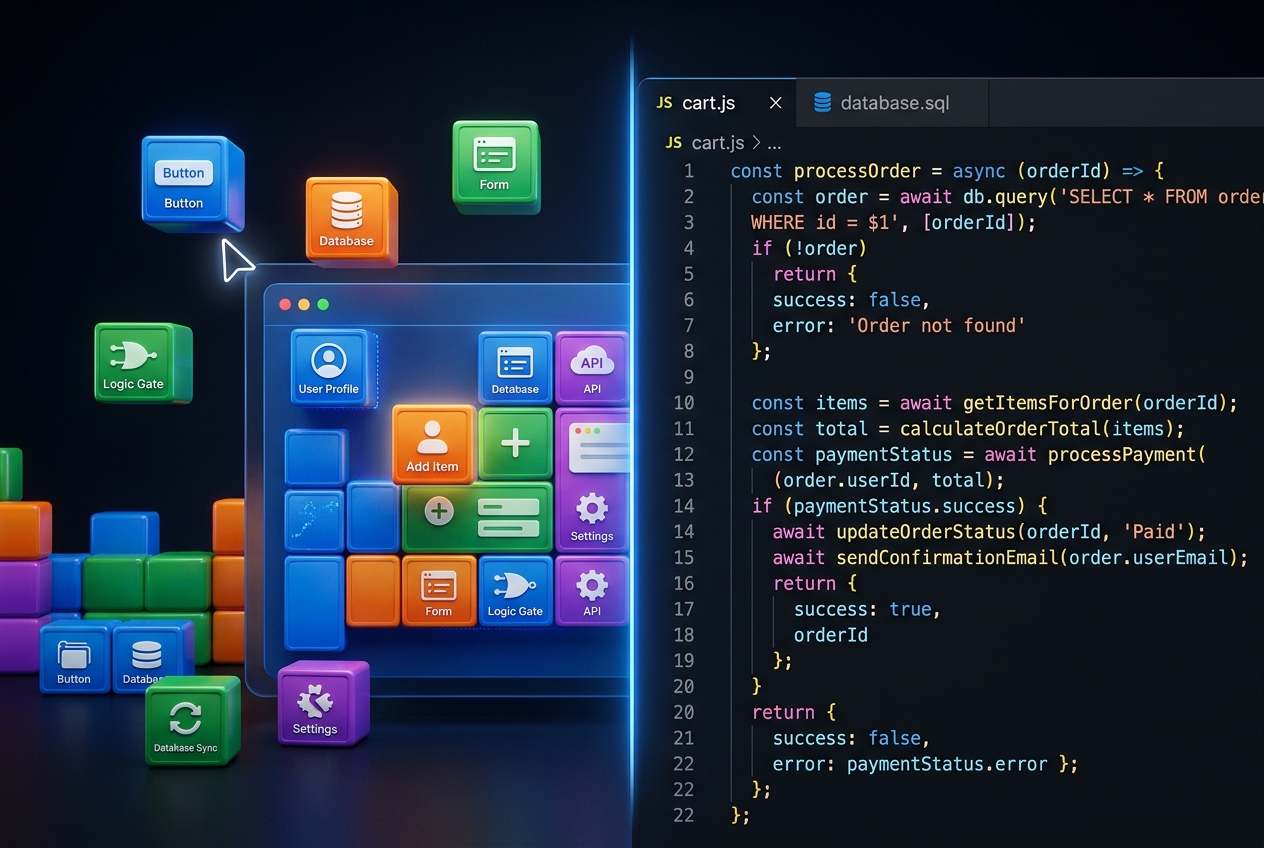
This was the most debated decision in the build. Pure Next.js would have been faster to ship, but the game logic — particularly the puzzle validation, AI hint generation, and cross-platform parity — pushed us toward Flutter.
The final architecture is a hybrid:
- Shell and content layer: Next.js 14 (App Router) for SEO, static rendering, and all non-game pages
- Game engine: Flutter compiled to WebAssembly, embedded as a component within Next.js pages
- AI layer: Claude Haiku via Anthropic API for adaptive hints and difficulty calibration
The Flutter WASM approach gives us identical game logic across web and mobile (we have iOS and Android apps in the pipeline using the same codebase). The Next.js shell handles metadata, server-side rendering for SEO purposes, and the content ecosystem around each game.
The one compromise: initial load time. Flutter WASM downloads a ~2MB runtime on first visit. We mitigate this with aggressive caching headers (the runtime is CDN-cached after the first load) and a Next.js skeleton that renders immediately while the game loads.
Claude Haiku as the Adaptive AI Layer
The AI integration is what separates SGPuzzleDaily from a static puzzle clone.
We integrated Claude Haiku into three touch points:
Adaptive difficulty: After a player completes five puzzles, Haiku analyses their performance patterns (average attempts, time per puzzle, hint usage) and adjusts the next puzzle's difficulty band. This happens server-side — the player just experiences puzzles that feel calibrated to them.
Contextual hints: Instead of revealing letters, our hint system generates a clue in the style of the puzzle type. For the word puzzle, it's a usage example. For the trivia quiz, it's a narrowing clue ("Think 19th century, think France"). Haiku generates these dynamically rather than us pre-writing thousands of static hints.
Daily challenge commentary: Each morning, the daily challenge includes a two-sentence intro generated by Haiku — a fun fact about the word, the historical context for the trivia question, or the math behind the number puzzle. This adds shareability and differentiates from the copy-paste content on most puzzle sites.
The Haiku integration costs roughly $0.003 per active session. At current traffic volumes, that's negligible. At scale, it remains far cheaper than static content production at the same quality.
Market Strategy: SG-First, Then MY and ID
We launched SG-first for two reasons: English content is our native format, and SG puzzle players over-index for the kind of quality-signalling that drives organic shares (LinkedIn, WhatsApp groups, office chat).
MY expansion came three weeks after launch. The puzzle market in Malaysia is nearly identical in content preference to Singapore, with a larger population and slightly lower competition for the same search terms. The main change was adding Bahasa Malaysia puzzle variants for two games (anagram and word scramble) — this opened up an entirely separate keyword cluster in BM.
Indonesia (ID) is the long-term prize. "Tebak kata" (word guessing) has breakout search volume, and Indonesian puzzle players have almost no quality local options beyond poorly localised internationalised clones. We've localised three games into Bahasa Indonesia and are tracking the results over the next six months.
The Content Engine Around the Games
The games generate traffic. The content ecosystem converts that traffic into return visits and backlinks.
Around each game, we built:
Daily results pages: Auto-generated after each puzzle closes, with the solution, difficulty rating, and player statistics. These index fast and capture "wordle answer today" style queries the following morning.
Strategy guides: "How to solve the daily word puzzle faster" — evergreen content that ranks for long-tail terms and internal links back to the game.
Weekly roundups: "This week's hardest puzzles" — low-effort content that picks up newsletter subscribers and social shares.
Answer archive: Every past puzzle answer, indexed. This is the biggest traffic driver after the games themselves — players who missed yesterday's puzzle search for the answer and find the archive.
Results After Six Months
We're six months into the build. The numbers are early but directionally positive:
- 18 games live, all indexed and ranking
- Top 5 positions for 14 game-specific brand terms (e.g. "sgpuzzle daily word", "singapore crossword online")
- 4,200 daily active players across all three markets
- MY accounts for 31% of traffic despite launching three weeks after SG
- Average session duration: 8.4 minutes (players complete more than one game per session)
- Newsletter: 1,100 subscribers from organic only
The AI layer (Claude Haiku) is driving measurably higher return rates. Players who received at least one adaptive hint in their first week have a 34% higher 30-day retention rate than those who didn't.
What We'd Do Differently
Launch the archive earlier. We added the answer archive in month two after realising it was the most searchable content type. If we'd built it on day one, we'd have an extra two months of indexed archive content.
Prioritise MY localisation. The Malaysian market responded faster and more strongly than we projected. We should have had full BM localisation at launch rather than treating it as a phase 2 project.
Build the mobile app in parallel. The Flutter WASM codebase makes this straightforward — we just haven't shipped the native app yet. Users are asking for it.
What This Means for Your Project
The SGPuzzleDaily build demonstrates a repeatable formula: identify a search trend that's peaking in Western markets but still early in SEA, build a technically differentiated version (Flutter WASM + AI), and back it with a content ecosystem that generates daily indexed content automatically.
If you're building a consumer app or content platform targeting Southeast Asia and want a team that understands both the technical build and the SEO strategy behind it, get in touch with PowerDigital.
We've done this once. We know exactly what we'd do the second time.